What is Hawk-Eye in Tennis, and Why Is It Important?
-
 Written by
Dalius Mikalauskas
Written by
Dalius Mikalauskas -
07 Apr 20255 min. read

Hawk-Eye in tennis is a technology that has become an inseparable tool in the sport. Hawk-Eye has gained attention for tracking the ball and assisting with decision-making during matches.
In our article, we will explain what Hawk-Eye in tennis is and its impact on tennis.
Table of content
Key Takeaways
- Hawk-Eye technology improves the accuracy of line calls, reducing human error.
- The system uses multiple cameras to track the ball’s trajectory for real-time feedback.
- Hawk-Eye in tennis ensures fair play by allowing players to challenge calls.
- The technology has become necessary in professional tournaments.
- Knowing how Hawk-Eye works helps fans appreciate the game’s strategy.
- As betting develops, Hawk-Eye helps improve tennis predictions.
What is Hawk-Eye and How Is It Used in Tennis?
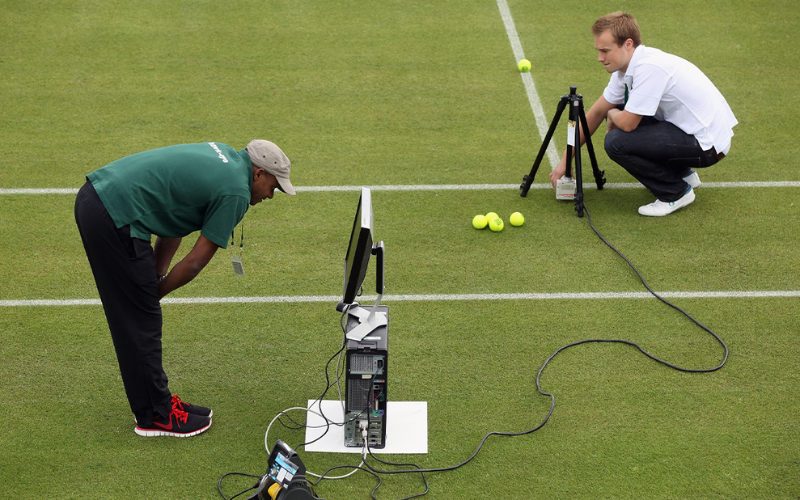
Hawk-Eye is a technology that tracks the ball’s movement in tennis using multiple high-speed cameras. These cameras are placed around the court to capture the ball’s position from different angles.
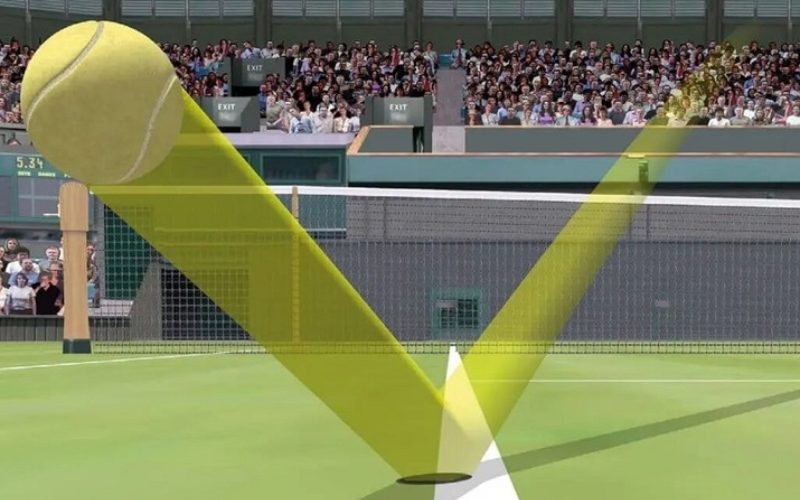
The system uses this data to create a 3D model of the ball’s path, showing its trajectory in real time. This helps players, referees, and fans accurately see the ball’s movement.
Hawk-Eye can show whether a shot is in or out, as well as the speed and spin of the ball. It creates a clear, easy-to-understand visual of the ball’s path, often shown on a screen during the match.
Accuracy is Hawk-Eye’s most important feature. It ensures fair play by providing precise results for line calls. The system can measure the ball’s position within 3.6 millimeters, making it highly reliable. This level of Hawk-Eye tennis accuracy helps eliminate human error, allowing players to challenge calls confidently.
When Was the Hawk-Eye First Used?
Hawk-Eye was first introduced in 2001 by a company called Hawk-Eye Innovations. Firstly, the technology was designed for cricket but quickly expanded to other sports, including tennis.
The first use of Hawk-Eye in tennis occurred in 2006 at the US Open. The technology was tested in a few matches before being fully integrated into the sport, including at the French Open.
At first, many players were skeptical about using Hawk-Eye, especially when making line calls. Some feared the technology might not be reliable enough to make important decisions.
However, as the system proved its accuracy, more players embraced it. Today, many tennis players support using Hawk-Eye, which provides a quick and accurate way to challenge calls during tournaments like the Australian Open.
Hawk-Eye Impact on Tennis Game
The introduction of challenges, powered by Hawk-Eye, has become an official part of tennis, endorsed by the International Tennis Federation.
Hawk-Eye is capable of impacting tennis games in several ways, including enhancing the accuracy of line calls made by umpires.
Enhanced Decision-Making
Hawk-Eye has improved tennis decision-making by providing more accurate line calls. Before its introduction, human judgment sometimes led to mistakes.
Improved Fairness and Reduced Errors
The technology has reduced the chance of errors and maintained fairness in the game. Players can trust that the calls are accurate, creating a more balanced playing field.
Faster Decision Process
Hawk-Eye speeds up the decision-making process. Instead of long delays while officials debate a call, the system provides immediate results, allowing players to return to the game quickly.
Hawk-Eye System in Tennis Limitations
While the Hawk-Eye system has changed tennis in a good way, it does have some limitations.
Dependence on Camera Angles
The Hawk-Eye tennis system relies heavily on the placement and quality of the cameras. If the cameras are not positioned properly or if there are technical issues, the system’s accuracy can be affected.
High Cost and Setup Time
The equipment for one court costs about €100,000 and takes approximately 3 days to set up. This makes it a costly and time-consuming system, especially for smaller tournaments or clubs with limited budgets.
Inability to Track All Factors
Hawk-Eye tracks the ball’s trajectory based on camera data but doesn’t catch everything. For example, it doesn’t fully measure the spin or subtle ball speed changes caused by wind or other conditions.
Limited Number of Challenges
Players can only challenge a limited number of calls per set. If they use all their challenges early in the match, they won’t have any left for later, even if further calls are questionable. This system limits players’ ability to rely on the technology entirely.
Typically, 3 challenges per set are allowed in tennis matches, but exceptions exist. For instance, players can use up to 2 challenges per set in Grand Slam tournaments.
Human Error in Reviewing
While Hawk-Eye is highly accurate, it is not immune to human error when reviewing calls. For instance, a referee can misinterpret the Hawk-Eye live system’s results or delay the review process, leading to frustration among players.
Hawk-Eye vs. Other Referee Technologies
Hawk-Eye is not the only technology used in sports, but it stands out due to its 99.9% precision and adjustability.
| Technology | Hawk-Eye | VAR (Video Assistant Referee) | Goal-line Technology | SportVU |
| Sport | Tennis | Football | Football | Basketball |
| Main Purpose | Tracks ball trajectory for line calls and challenges | Reviews important plays (goals, penalties, offside) | Determines if the ball has fully crossed the goal line | Tracks player movements, shots, and positioning |
| Method of Operation | Uses high-speed cameras to create a 3D model of the ball’s path | Analyzes video footage to review and assist referees’ decisions | Uses cameras and sensors to detect the ball’s position | Highly accurate for goal-line decisions |
| Key Strenght | 99.9% precision for ball trajectory and line calls | Useful for overall play reviews | Uses cameras to track player and ball data | Great for analyzing player and team performance |
Hawk-Eye in Tennis Bottom Line
Hawk-Eye technology in tennis transformed the way people play and officiate. Technology’s accuracy and speed provide players with a reliable tool to challenge calls, leading to fairer outcomes on the court.
While Hawk-Eye in tennis has some limitations, the benefits far outweigh the drawbacks, making it an inseparable part of modern tennis.
Players and fans alike appreciate Hawk-Eye’s clarity and transparency in the game. Its precise tracking and real-time feedback not only impact gameplay but also influence sports betting at tennis bookmakers, providing a clearer picture of the match’s outcome.
Overall, Hawk-Eye tennis technology ensures that every match is decided by skill rather than human error.
FAQ About Hawk-Eye in Tennis
⭐ Is the Hawk-Eye still used in tennis?
✅ Yes, Hawk-Eye is still used in tennis and has become an integral part of the sport.
⭐ How accurate is Hawk-Eye in tennis?
Hawk-Eye in tennis can measure the ball’s position within 3.6 millimeters, making it 99.9% reliable and accurate.
⭐ How much does Hawk-Eye tennis cost?
Hawk-Eye says the equipment for one court costs about €100,000.
⭐ When was the Hawk-Eye introduced in tennis?
Hawk-Eye was first introduced in tennis in 2006 at the US Open.
⭐ What does Hawk-Eye do in tennis?
Hawk-Eye in tennis tracks the ball’s movement and assists with decision-making by providing accurate line calls.
⭐ What is Hawk-Eye in tennis?
Hawk-Eye in tennis is a technology that uses multiple high-speed cameras to track the ball’s trajectory in tennis.
⭐ How does Hawk-Eye work in tennis?
Hawk-Eye in tennis uses high-speed cameras to capture the tennis ball’s position from different angles and create a 3D model of its path for the electronic line calling system.
⭐ What is Hawk-Eye?
Hawk-Eye is a ball-tracking technology used in various sports, including tennis, to provide accurate decision-making.
⭐ Who Invented Hawk-Eye?
Hawk-Eye was invented by a company called Hawk-Eye Innovations.
⭐ How does Hawk-Eye technology impact tennis betting?
Hawk-Eye technology enhances the accuracy of line calls and match outcomes, providing bettors with more reliable data, which can influence odds and betting strategies at top betting sites.

Crypto and Sports Betting Expert