Winter Sports Betting Guide 2026
-
 Written by
Dalius Mikalauskas
Written by
Dalius Mikalauskas -
06 Feb 202623 min. read

Winter sports betting is one of the few places where casual and experienced sports fans can bet on the same events and markets, often creating mispriced odds that last only minutes.
Here, we share how to read those winter sports betting markets, choose the right sports bets, and approach the winter season in a smarter, more profitable way.
Table of content
- Key Takeaways
- What Is Winter Sports Betting?
- Which Winter Sports Can You Bet On?
- What Are the Biggest Winter Sports Events to Bet On?
- How Do Winter Sports Betting Markets and Odds Work?
- Choosing a Betting Site for Winter Olympic Sports
- Tips & Strategies for the Best Betting Opportunities
- Mistakes to Avoid for the Winter Sports Betting
- Responsible Betting During the Winter Sports Season
Key Takeaways
- Winter sports betting results depend heavily on conditions and sport-specific rules.
- Top-N and head-to-head bets reduce risk in volatile events.
- Live markets react quickly to splits, shots, and goals.
- Using multiple online bookmakers improves odds and long-term value.
- Bankroll control is necessary in high-variance winter sports.
What Is Winter Sports Betting?
Winter sports betting focuses on events held on snow or ice, including alpine skiing, biathlon, cross-country skiing, ski jumping, ice hockey, speed skating, curling, and snowboarding.
What makes these sports different from football or basketball is how much the result depends on the athlete and the conditions. Weather, wind, snow quality, ski preparation, and even start order can all affect who wins.
In alpine skiing, for example, the course gets worse as more skiers go down it. On icy downhill tracks, racers starting in the top 10 win around 70–75% of the time, while those starting later rarely make the podium.
In biathlon, one missed shot sends the athlete into a 150-meter penalty loop, which costs roughly 20–25 seconds. In a sprint race, that is often enough to turn a medal contender into someone finishing outside the top ten.
Why is Winter Sports Betting Growing?
Because race outcomes in winter sports can change after every split time, shooting round, or weather shift, odds move quickly during races, especially in live markets that update in real time.
The market itself has grown a lot in recent years. Global sports betting surpassed USD 80 billion in 2023, and winter sports now account for a much larger share during Olympic and world championship seasons.
During the 2022 Beijing Winter Olympics, betting volumes on winter events were estimated to be 4 to 5 times higher than during a normal World Cup season. Bookmakers have also added more detailed markets, like skier matchups and biathlon shooting performance.
With online betting now legal in most of Europe and more than 30 U.S. states, winter sports are no longer niche.
Which Winter Sports Can You Bet On?
Winter sports include a wide range of snow and ice events, from individual races to full-team competitions, each offering different markets and betting styles.
Alpine Skiing and Downhill Events
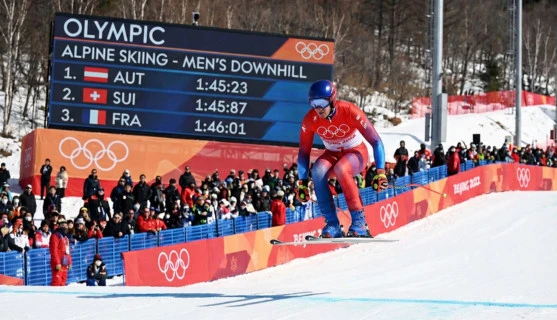
Alpine skiing includes slalom, giant slalom, super-G, downhill, and combined events, all of which are part of the FIS World Cup, the main international competition circuit.
These races test different skills, from technical turning to pure speed, with downhill skiers often exceeding 130 km/h. Results are decided by extremely small margins, sometimes just 0.01 seconds, which makes this sport especially attractive for detailed and quick markets.
We put the main alpine disciplines into a table:
| Discipline | What does it focus on? | Why is it good for betting? |
|---|---|---|
| Slalom | Tight turns & fast reactions | High crash rate and small time gaps create volatile odds |
| Giant slalom | Wider turns & rhythm | Consistent athletes often dominate head-to-head markets |
| Super-G | Mix of speed & technique | Fewer races mean mispriced odds appear more often |
| Downhill | Max speed on long courses | Start order and weather strongly affect results |
| Combined | Speed + technical run | Rewards versatile skiers, not just specialists |
Alpine skiing typically offers the broadest range of betting markets among winter sports. Winter sports betting sites cover race winners, podium finishes, top-10 placements, and dozens of head-to-head matchups, often adjusted live as the course and weather conditions change.
Cross-Country Skiing and Biathlon
Cross-country skiing and biathlon are endurance-based sports on snow courses, and results are determined by different types of performance. These events take place almost every week during the winter season, with athletes competing in multiple formats and locations.
Because the same competitors face each other repeatedly across many events, bookmakers build detailed profiles for each athlete, which makes season-long markets, overall winners, and rivalry-based matchups especially popular.
Here are how these 2 sports differ for betting:
| Feature | Cross-country skiing | Biathlon |
|---|---|---|
| Main deciding factor | Endurance and pacing | Ski speed plus shooting accuracy |
| Typical race length | 5–50 km | 7.5–20 km depending on format |
| Key risk | Fatigue and ski setup | Missed shots and penalty loops |
| Live market activity | Moderate | Very high after each shooting round |
Ski Jumping and Nordic Combined
Ski jumping and Nordic combined are winter sports where results are based on scoring rather than just time. Athletes compete in both individual and team events as part of the FIS Ski Jumping World Cup, which runs across Europe and Asia throughout the season.
Performances are affected not only by jump length, but also by wind, take-off conditions, and how judges rate each jump, making these events more sensitive to small changes.
This is how scoring works in ski jumping:
| Component | What does it measure? | Why does it matter for betting? |
|---|---|---|
| Distance points | How far does the jumper flies | Longer jumps increase base score |
| Style points | Body position, landing, stability | Judges can add or subtract crucial points |
| Wind compensation | Headwind or tailwind | Adjusts scores for changing conditions |
| Gate compensation | Take-off ramp height | Balances speed differences between jumps |
In Nordic combined, these ski jumping scores are converted into time gaps for the cross-country race that follows, so a strong jump gives an athlete a head start, while a weak one forces them to chase the leaders on the snow.
Snowboarding and Freestyle Skiing
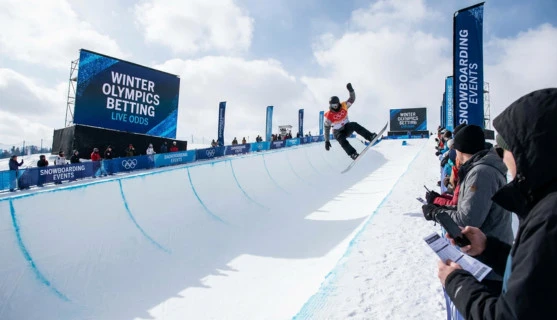
Snowboarding and freestyle skiing cover many acrobatic winter disciplines, including halfpipe, slopestyle, big air, moguls, and ski cross. Course design, weather, and judging style can all influence results in these sports.
These events are featured at both the Winter Olympics and major winter sports competitions, such as the X Games, where the best riders and skiers compete on specially built courses that reward creativity, height, and technical difficulty.
Unlike racing, many of these events are judged, which means scores depend not only on the tricks performed but also on how they are executed and how judges rank them.
The main freestyle and snowboard disciplines are:
| Discipline | What happens in a competition? | Why does it matter for betting? |
|---|---|---|
| Halfpipe | Riders perform tricks on a U-shaped ramp | Big jumps and trick difficulty drive scores |
| Slopestyle | Tricks over rails and jumps | Run consistency matters as much as single big tricks |
| Big air | One massive jump | High risk, high-reward scoring |
| Moguls | Fast skiing through bumps with jumps | Combines speed with judged aerials |
| Ski cross | Multiple athletes race together | Contact and crashes create unpredictable outcomes |
Ice Hockey Betting Markets
Ice hockey is the largest and most active winter sport for betting, with games taking place almost every day across leagues like the NHL, KHL, SHL, and major international tournaments.
Unlike individual winter sports, ice hockey follows a team-based league system with regular schedules, standings, and playoffs, creating a steady flow of matches and markets.
Because teams play long seasons and meet often, online betting sites can price matches using form, injuries, home ice, and goalie data, keeping both the match and futures markets highly liquid.
Main ice hockey betting markets include:
| Market type | What does it cover? | Why is it popular? |
|---|---|---|
| Moneyline | Which team wins the game | Simple win-or-lose outcome |
| Puck line | Handicap on goals | Allows better odds on favorites |
| Totals | Over or under goals | Tied closely to team scoring trends |
| Period betting | Results within each period | More frequent betting opportunities |
Bobsleigh, Luge, and Skeleton
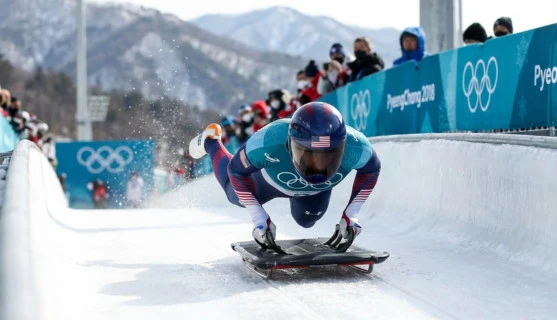
Bobsleigh, luge, and skeleton are sliding sports where athletes race down ice tracks at speeds over 120 km/h, with results decided by fractions of a second. They are part of the IBSF World Cup and use the same tracks across multiple winter venues.
Because margins are so small, even a tiny mistake in steering or start time can completely change the final ranking. Bookmakers also treat these disciplines as pure timing competitions, making them well-suited to outright winner bets and direct athlete matchups.
Below, you’ll find how these sliding sports compare:
| Discipline | How does the race work? | What affects the result most? |
|---|---|---|
| Bobsleigh | Teams push and ride a sled | Start speed and driver control |
| Luge | An athlete lies on their back | Clean lines through curves |
| Skeleton | Athlete goes head-first | Start push and corner precision |
Speed Skating and Short Track
Speed skating and short track are ice racing disciplines where athletes compete over set distances on oval tracks, but they behave very differently from a winter sports betting perspective.
Long-track results are influenced by pacing and lap times, while short-track results are heavily influenced by tactics, overtakes, and crashes, which can remove even the fastest skater from contention.
This table compares the 2 formats:
| Format | Race style | Typical distances | Main risks | Live market behavior |
|---|---|---|---|---|
| Long track | Pairs vs clock | 500 m–10,000 m | Fatigue, pacing | Odds follow split times |
| Short track | Group race | 500 m–1,500 m | Crashes, penalties | Incidents change odds |
Curling
Curling is a highly tactical winter sport where teams take turns sliding stones toward a target while sweeping the ice to control speed and direction. Matches are played over a series of ends rather than on a continuous clock, which makes momentum, shot selection, and the last-stone advantage key factors.
Because teams face each other repeatedly across tournaments, online sports betting sites can track form, consistency, and head-to-head history in detail.
The main curling betting markets are as follows:
| Market type | What does it cover? | Why is it used? |
|---|---|---|
| Match winner | Who wins the game | Simple outcome for each fixture |
| Set betting | Who wins at each end | Allows betting on momentum swings |
| Tournament outrights | Overall event champion | Suited for multi-day competitions |
Figure Skating
In figure skating, athletes perform a short program and a free skate, both scored by judges. Points come from technical elements such as jumps, spins, and lifts, as well as from program components such as skating skills and musical interpretation.
Small mistakes, like a fall or under-rotated jump, can cost several points and quickly change the final standings.
The figure skating categories for betting consist of:
| Category | What does it include? | Why does it matter for betting? |
|---|---|---|
| Singles | Individual skaters | Fewer variables, easier to model |
| Pairs | Two-skater teams | Errors have a larger impact |
| Ice dance | Choreography-focused routines | Higher judging subjectivity |
Because results depend on judging rather than pure time or distance, outright markets dominate figure skating, as predicting final placements is more reliable than trying to price individual segments or small score differences.
What Are the Biggest Winter Sports Events to Bet On?
The winter games season centers on a few major global events that attract the most attention and offer to bet on winter sports markets, bringing together top athletes.
Winter Olympics
The 2026 Winter Olympics, held from February 6 to 22, will take place across northern Italy, with competitions hosted in Milan, Cortina d’Ampezzo, Bormio, and nearby alpine venues.
The winter sports betting markets we think are worth paying attention to during the Olympics include:
| Market type | What does it represent? | Why does it attract high volume? |
|---|---|---|
| Event winner | Gold medal for a single event | Clear, high-profile outcomes |
| Medal markets | Gold, silver, and bronze | Covers multiple podium places |
| Country totals | Total medals by nation | Allows long-term tracking across Games |
| Head-to-head | Two athletes or teams are compared | Removes the uncertainty of large fields |
| Futures | Winners set before the Games | Popular months ahead of the opening ceremony |
Because hundreds of medal events run back-to-back across different venues, the Olympics consistently generate the largest volume for those who bet on winter Olympics, and Milan-Cortina 2026 is expected to be the biggest yet.
FIS Alpine and Nordic World Cup Series
The FIS Alpine Ski World Cup runs from late October to late March each season, with around 80+ individual races across Europe, North America, and Asia. Points are awarded to the top 30 finishers, and athletes accumulate them over the season to compete for titles.
The Nordic World Cup follows a similar calendar across cross-country, ski jumping, and Nordic combined, making these circuits the main recurring winter competitive season outside the Olympics.
Here’s how the World Cup season is structured:
| Element | What does it represent? | Why does it matter for betting? |
|---|---|---|
| Race weekends | Multiple events at each stop | Regular markets across the winter months |
| Points table | Cumulative season ranking | Rewards consistency for futures |
| Discipline titles | Winners in slalom, downhill, etc. | Allows targeted long-term bets |
| Overall champion | Most total points | Main season-long market |
Bookmakers offer individual race markets and futures based on season-long performance, as the same athletes compete week after week, with points tracked across events.
Winter X Games
The Winter X Games are the biggest action-sports event of the winter season, held every January in Aspen, Colorado, and built around trick-based competitions.
The event brings together the top snowboarders and freestyle skiers for a short, high-profile program that focuses on difficulty, execution, and creativity instead of pure speed.
Aspen hosts the core winter disciplines, with finals typically packed into a few days. Because athletes usually get only a small number of runs, small mistakes or one standout trick can completely flip the leaderboard.
Winter X Games events have different disciplines, which you can see in the table:
| Discipline | What do the athletes do? | Why does it draw betting interest? |
|---|---|---|
| Slopestyle | Tricks over rails and jumps | Rewards consistency and trick variety |
| Superpipe | Large halfpipe runs | Big air and clean landings drive scores |
| Big air | One massive jump | High-risk, high-reward outcomes |
| Knuckle huck | Tricks on the jump’s landing | Creative styles can beat technical runs |
With judged scoring and limited runs, Winter X Games markets often show wider betting odds and more surprises than traditional winter races, making it one of the most volatile and popular winter sports betting events each season.
IIHF Ice Hockey World Championship
The IIHF Ice Hockey World Championship is held every year in May, with national teams from Europe, North America, and Asia for a two-week international tournament.
It runs at the same time as the NHL playoffs, which means many NHL players are unavailable, giving European leagues like the SHL, Liiga, and KHL an advantage.
The tournament uses a group stage followed by knockout rounds, creating a clear progression from round-robin play to single-elimination games.
How the IIHF World Championship is structured, you can check out below:
| Stage | What happens? | Why does it matter for betting? |
|---|---|---|
| Group stage | Teams play round-robin games | Allows form tracking and live markets |
| Quarterfinals | Top teams enter knockouts | One loss eliminates a team |
| Semifinals | Final four remain | Higher limits and tighter odds |
| Medal games | Gold and bronze matches | Most heavily winter bet games |
Other Notable Competitions
Beyond the Olympics and major World Cups, several winter tournaments generate strong betting interest every season because they bring together elite athletes in short, high-profile events.
These competitions usually run for a few days or weeks, making them ideal for both short-term outrights and daily matchups.
Below, you’ll find other key winter tournaments outside the Olympics:
| Event | Sport | When does it run? | Why does it matter for betting? |
|---|---|---|---|
| IBU Biathlon World Cup | Biathlon | November to March | Weekly races with strong live markets |
| IBSF World Cup | Bobsleigh, luge, skeleton | November to February | Time-based events are suited for head-to-heads |
| World Curling Championships | Curling | March–April | Multi-day tournament with match and outright markets |
| ISU Grand Prix | Figure skating | October to December | Early-season form indicator |
| Four Hills Tournament | Ski jumping | Late Dec – early Jan | Single-venue prestige event with high volume |
How Do Winter Sports Betting Markets and Odds Work?
Winter sports betting is based on long-term season markets and short-term race or match markets, with odds influenced by form, conditions, and past results.
Outright and Futures Betting
Outright and futures bets focus on results decided in the future. In winter sports betting, this includes markets like:
- Overall World Cup winners
- Olympic champions
- Country medal totals.
These markets open weeks or months ahead and are priced based on past results, current form, and expected participation, with odds shifting as races are run and standings change.
Some of the most common outright and futures markets are:
| Market type | What does it cover? | Why is it popular? |
|---|---|---|
| Season champion | Overall World Cup winner | Tracks consistency over many events |
| Event winner | Winner of a single race | Simple high-profile outcome |
| Medal markets | Gold, silver, or bronze | Covers multiple podium spots |
| Country totals | Total medals by nation | Popular during major tournaments |
Podium Finish and Top-N Markets
Podium and Top-N markets focus on whether an athlete finishes within a certain position range rather than winning outright.
In winter sports, where results can be affected by many factors, these markets are especially popular because they slightly reduce risk. They are mostly used in alpine skiing, biathlon, and cross-country skiing.
Common Top-N finish markets include:
| Market | What does it mean? | Why is it useful? |
|---|---|---|
| Top 3 | Athlete finishes on the podium | Covers all medal positions |
| Top 6 | Athlete finishes in the top half of finalists | Allows room for small mistakes |
| Top 10 | Athlete finishes in the top ten | Ideal in large starting fields |
Head-to-Head Matchups
Head-to-head markets compare two athletes or teams and ask which will finish ahead. Instead of predicting the overall winner, bettors only need to decide which of the paired competitors will place higher.
In timed events like skiing or speed skating, the athlete with the better race time wins the matchup. In judged sports such as figure skating or freestyle skiing, the higher-scoring performance determines the outcome.
Below, we share how head-to-head markets work:
| Sport type | How is the matchup settled? | What affects the result? |
|---|---|---|
| Timed sports | Faster total time wins | Start order, pace, and penalties |
| Judged sports | Higher final score wins | Judges, execution, and consistency |
Winning Margin and Exact Finishing Position
Winning margin and exact position markets focus on how close a race is and where an athlete finishes. They are most common in sports with precise timing, such as alpine skiing and speed skating, where results are often separated by hundredths of a second.
As alpine and skating races are so tightly timed, bookmakers can price these detailed outcomes with much more precision than in most team sports.
In the table, you’ll find common margin and position markets:
| Market type | What does it measure? | Why is it offered? |
|---|---|---|
| Winning margin | Time gap between the first and the second | Captures how dominant a win is |
| Exact finish | Athlete’s final placing | Allows precise predictions |
| Time bands | Winner’s margin in set ranges | Suits close or runaway races |
| Top-3 exacta | Exact podium order | Higher risk, higher payout |
Live Betting on Winter Sports
Live betting allows odds to update while an event is already in progress, which is especially important in winter sports that unfold in stages. Many disciplines are decided over multiple runs or periods, so early results do not always determine the final outcome.
In alpine skiing, first-run leads can disappear in the second run, while in ice hockey, odds move with every goal, penalty, and period.
Live betting is most active in these sports:
| Sport | How is the event split? | What changes the odds? |
|---|---|---|
| Alpine skiing | Two-run races like a slalom | First-run time gaps |
| Biathlon | Multiple shooting rounds | Penalty loops |
| Speed skating | Split times | Pace vs. fatigue |
| Ice hockey | Three periods | Goals, penalties, power plays |
Sport-Specific Special Markets
Special markets focus on specific actions or performance metrics within an event rather than the final result. They are common in winter sports because many disciplines produce detailed data during competition, allowing bookmakers to offer highly targeted winter sports bets.
These markets allow winter sports betting fans to focus on a single skill, such as shooting or speed, rather than the overall outcome of a race or match.
Examples of sport-specific markets include:
| Sport | Special market | What it measures |
|---|---|---|
| Biathlon | Shooting accuracy | Hits vs. misses on the range |
| Speed skating | Fastest lap | Best single lap time |
| Freestyle skiing | Highest run score | Top judged score |
| Ice hockey | Penalty minutes | Total time spent penalized |
Choosing a Betting Site for Winter Olympic Sports
A good sports betting site is not just about odds. The difference when choosing a betting site comes down to winter sports coverage, the quality of live markets, and how well it handles busy periods like the Olympics.
- Check licensing, regulation, and protection. A reliable site must be licensed and regulated in an EU market or by bodies such as Malta or the UK, which protect player funds and ensure fair payouts. Avoid offshore sites with little real oversight.
- Verify winter sports coverage and market depth. Look for full coverage across all major sports, with 30–100+ markets per winter Olympic sports day, including winners, Top-10s, head-to-heads, discipline titles, and country totals.
- Compare odds quality, not just headlines. Small differences matter in winter sports. For example, odds of 2.10 vs 2.00 on a biathlon head-to-head increase long-term return by over 5%. Check several events across different winter sports rather than one headline race.
- Analyze bonuses and betting rules. A USD 100 bonus with 10x betting on odds above 1.80 is far better than a USD 200 bonus with 40x betting. Also, check whether winter sports are excluded.
- Test live betting and streaming. Top sports betting sites offer live timing, video streams, and cash-out for slalom runs, shooting rounds, and hockey periods. Delayed feeds or frozen odds during key moments are an instant red flag.
- Review mobile and payout performance. During major events like the Olympics, a good betting site must process withdrawals within 24–48 hours and keep its mobile betting app stable even when thousands of users are using it.
Tips & Strategies for the Best Betting Opportunities
Winter sports betting is driven by small details such as weather, starting order, and scoring rules, not just team strength. Knowing these gives you a real edge.
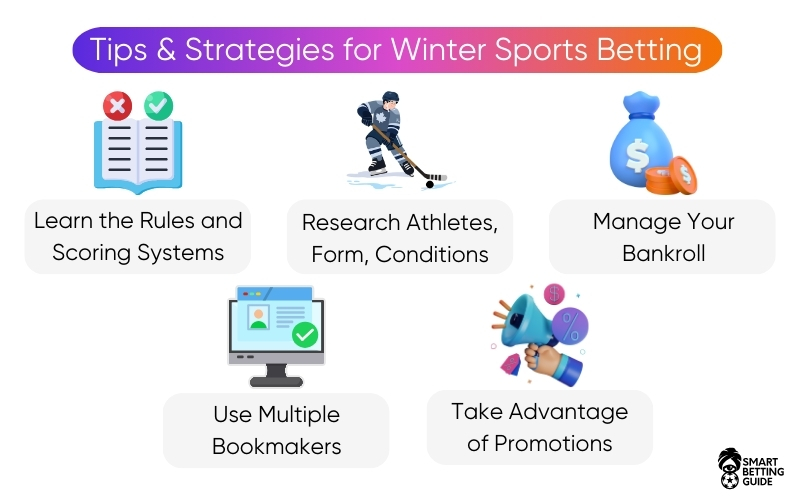
Learn the Rules and Scoring Systems Before You Bet
Winter sports are decided by very specific rules that directly affect the outcome. In biathlon, every missed target adds a 150-meter penalty loop, which usually costs 20–25 seconds and can drop an athlete from first to outside the top ten.
In alpine skiing, a single missed gate means DNF, even if the skier had the fastest split times. In figure skating, a fall on a triple jump can cost 3–5 points, which is often the difference between gold and finishing off the podium.
Moreover, you must understand format differences, such as two-run events in slalom, or short programs and free skates in figure skating. These details determine whether a strong early performance is enough to win or if there is still room for the result to change.
Research Athletes, Form, and Conditions
Recent results matter more than season-long reputation. A skier who placed 3rd, 5th, and 6th in the last three races is usually in better form than the one who just returned from injury.
Track familiarity is also key, as some downhill specialists perform far better on certain courses, such as Kitzbühel or Bormio. Weather is equally important: fresh snow slows late starters in skiing, and strong winds can reduce ski jump scores by several points.
It also helps to check start lists and bib numbers, since early starters often have better snow conditions. In biathlon, looking at recent shooting accuracy percentages can be more predictive than ski speed alone, especially in sprint and pursuit races.
Manage Your Bankroll and Set Realistic Expectations
Winter sports betting have fewer events and higher variance than other sports, so bankroll control is a must. Losing streaks of 5–10 bets are normal in sports like alpine skiing or biathlon, as a single crash, missed shot, or disqualification can wipe out an otherwise perfect prediction.
A common guideline is to risk no more than 1–2% per bet. With a USD 1,000 bankroll, that means staking USD 10–20 even on strong picks. Many experienced bettors also cap daily losses at 5–10% of their bankroll to avoid chasing losses during busy race days.
Additionally, it helps to adjust stake size downward during major tournaments like the Olympics, where events increase exposure to variance even if your strategy stays the same.
Use Multiple Bookmakers to Find the Best Odds
In niche winter sports, price differences are often large. One winter sports betting site might offer 2.20 on a biathlon head-to-head while another shows 1.95 for the same matchup. Betting USD 100 at 2.20 instead of 1.95 returns USD 220 vs USD 195, a 13% difference on one bet.
This is why probability quality matters more than just picking winners. As sports analytics researchers Michael Walsh and Rohan Joshi write in “Machine Learning for Sports Betting“, model calibration is more important than accuracy” – better percentage estimates help spot value odds.
It’s also useful to track which bookmakers are strongest for specific sports. Some sites consistently offer better prices for biathlon and skiing, while others focus more on ice hockey. Keeping a simple record of where you find the best odds will help you in the future.
Take Advantage of Promotions Without Chasing Losses
Bonuses can increase value, but only when the terms are fair. A USD 100 bonus with 10× betting on odds above 1.80 requires USD 1,000 in bets, which is realistic across a full winter season. A 40× bonus would require USD 4,000, forcing many low-value bets just to clear it.
It is also important to check if winter sports count at 100%, as some sites only count them at 50% or less, which doubles the real betting requirement.
Another key detail is bet size limits. Many bonuses cap qualifying bets at USD 5–10 per bet. Also, check time limits, since some offers must be completed within 7–14 days, which can force you to place too many bets during a short competition window.
Mistakes to Avoid for the Winter Sports Betting
Winter sports betting is unforgiving because races are few, conditions change fast, and small rule details can decide everything. Avoiding basic errors matters more than picking winners.
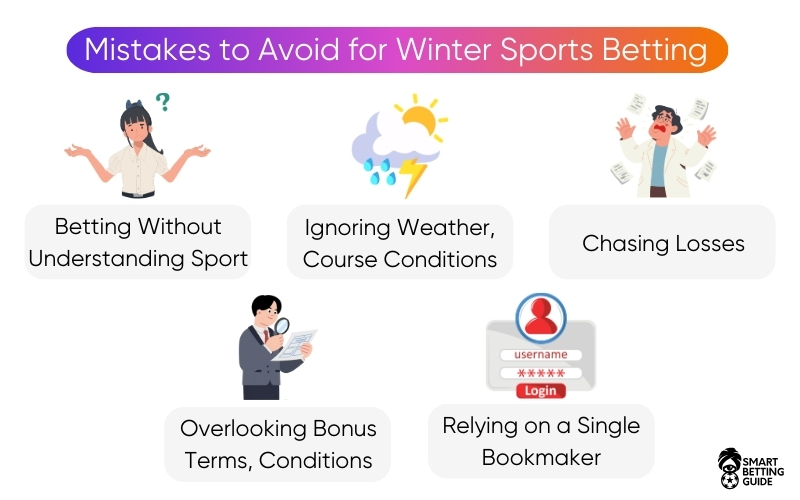
Betting Without Understanding the Sport
A common mistake is treating winter sports like standard team sports, where form and rankings tell most of the story. In reality, many winter disciplines are decided by technical details that completely change the probability of a result.
For example, in a two-run slalom, a skier in 15th after run one can still win with a strong second run, while in biathlon, fast skiers can lose to slower but more accurate shooters, making matchups harder than just picking the quickest name.
Ignoring Weather and Course Conditions
Conditions matter more in winter sports than in almost any other betting category. Track temperature changes ski wax performance, which can swing times by 0.5 seconds or more on a downhill run.
In ski jumping, a tailwind reduces lift and can cost several meters of distance, which directly lowers points. Even in ice sports, arena temperature affects ice hardness and puck speed. Bettors who only look at rankings and ignore forecasts often miss the biggest edge available.
Chasing Losses During Short Betting Windows
Winter sports betting happens in bursts. You may get 3 or 4 races in a single morning, then nothing until the next day. After one bad result, many bettors try to “fix” the day by increasing stake size on the next race.
This is especially dangerous in sports where crashes, disqualifications, or judging swings are common. One unlucky run can wipe out a day’s profit, and chasing usually makes that damage worse.
Overlooking Bonus Terms and Conditions
Not all bonuses are equal for winter sports. Some bookmakers exclude disciplines like ski jumping or freestyle from bonus betting, or count them at a reduced rate. Others require bets only on win markets, blocking safer options like Top-10 finishes or matchups.
Before using a bonus, always check whether the sports you plan to bet actually count toward the requirement and whether minimum odds force you into higher-risk selections.
Relying on a Single Bookmaker
Using just one betting site limits access to markets that are especially valuable in winter sports. Some bookmakers offer detailed markets such as fastest lap, shooting accuracy, or run-by-run betting, while others do not.
Even more important, odds on niche events are often less efficiently priced, meaning small differences between bookmakers can add up to a big advantage over a season. Having multiple accounts gives you both better prices and more ways to bet.
Responsible Betting During the Winter Sports Season
Winter sports betting is more volatile than most other sports because crashes, weather, and judging can change results instantly. This makes it especially important to bet responsibly by controlling your spending and decisions.
Some rules help keep betting under control even during the winter sports betting season.
- Set a fixed budget for the season, such as USD 300–50,0, and divide it into limits.
- Use deposit and loss limits in your betting account to block impulsive spending.
- Limit yourself to a small number of bets per day, such as 3–5.
- Do your research before events, not while watching live odds move.
- Take breaks after losses to avoid emotional or revenge betting.
Moreover, if betting starts to feel out of control, professional help is available. Internationally, services such as GamCare, GambleAware, and Gamblers Anonymous provide confidential advice, online chats, and support groups for anyone struggling with gambling-related harm.
FAQ About Winter Sports Betting
⭐ Is Winter Sports Betting Legal?
Winter sports betting is legal in most regulated markets across Europe and in many U.S. states, as long as you use a licensed sports betting site approved in your country.
⭐ What Is the Best Winter Sport to Bet On for Beginners?
Ice hockey and alpine skiing are the easiest for winter sports betting beginners because they offer frequent events, easy rules, and a variety of sports markets, such as match winners and head-to-heads.
⭐ Can you bet on Winter Olympics?
Yes, bookmakers offer full markets for the 2026 Milan–Cortina Winter Olympics bets, including event winners, medal markets, country totals, and long-term futures.
⭐ How Do Weather Conditions Affect Winter Sports Betting?
Weather can quickly change winter sports betting results, as snow quality, wind, and temperature affect ski speed, jump distance, and overall performance.
⭐ What Types of Bets Can You Place on Winter Sports?
You can place bets on winners, podium finishes, head-to-head matchups, exact positions, live markets, and sport-specific options like biathlon shooting accuracy or fastest ski runs.

Crypto and Sports Betting Expert